Today Fibich is moving again.
The project has been quiet for a while, mostly because other work needed attention and this app had to stay aside for a bit. That pause was useful in its own way. Coming back to Fibich now makes the next priority clearer: before adding more visible features, the app needs to remember the user's music library reliably.
A music player becomes much more useful once it can remember the shape of your library. Not only what is playing right now, but where your music lives, how tracks are represented, what metadata belongs to them, and how the app should rebuild that picture when it opens again.
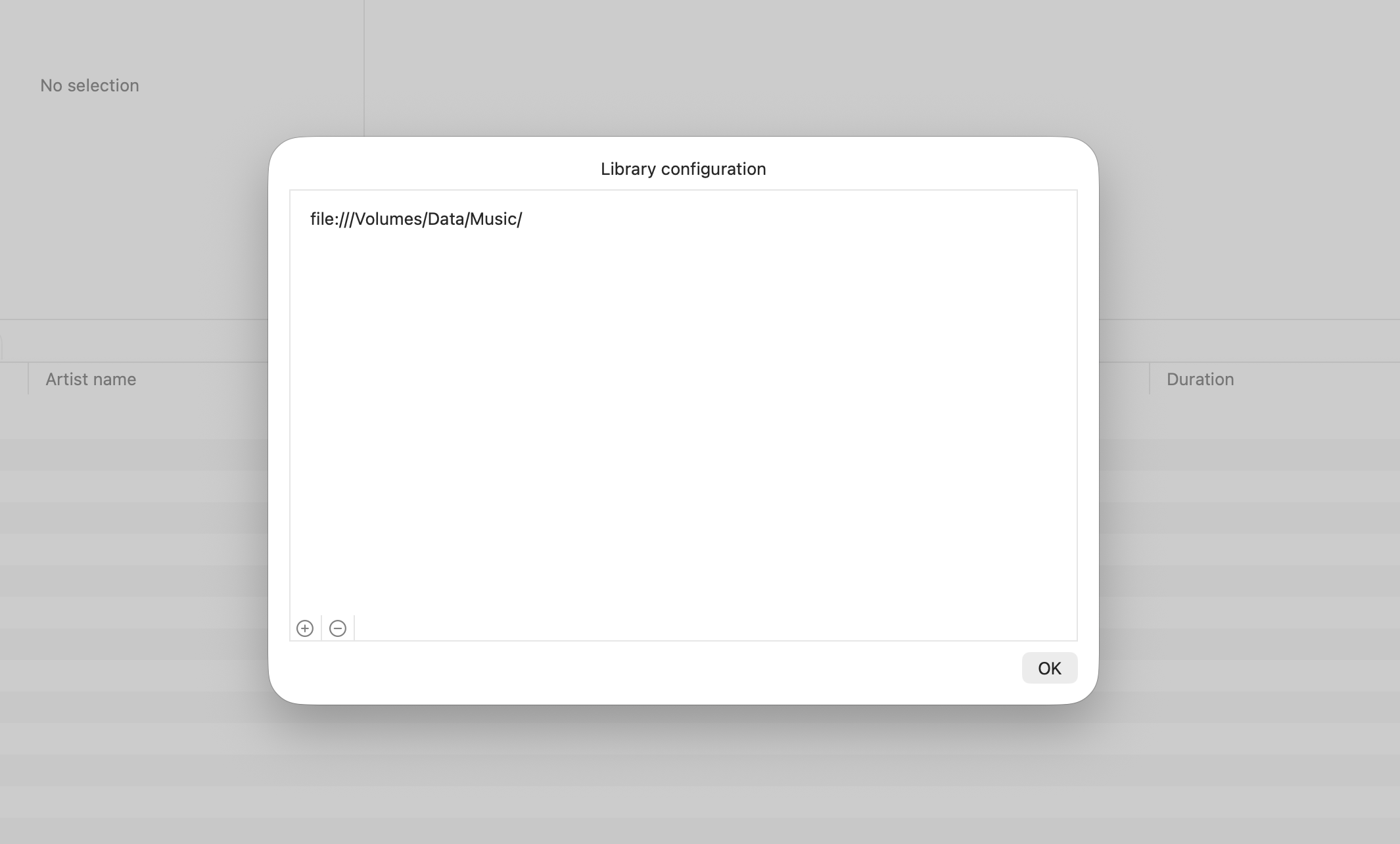
Fibich now has its first persistence layer, built with SwiftData, and a library model designed around stored records. The user-facing result is that the library can survive beyond the current session.
A local music library is not temporary. People spend years building these collections. Lossless albums, FLAC files, archived releases, live recordings, carefully named folders, and unusual formats often carry a personal history. A hi-fi audio player for macOS should treat that library as something stable and valuable, not as a list that disappears whenever the app restarts.
Metadata now has a more central role in Fibich.
This matters because filenames are never enough. A real music collection needs track titles, artists, albums, durations, formats, and eventually much more. Metadata is what turns a folder of audio files into a browsable music library. It is also what makes playlists readable, search useful, and album organization possible.
Today's work introduces a clearer place for metadata in the app and begins separating the responsibilities inside the codebase. The library browser, playlist, player, file access, and data coordination now have clearer boundaries. New features will not all depend on one central component.
The interface now gives the library browser its own area and places metadata beside playback. Fibich can work as a library tool as well as a player.
This is still early work. The app does not yet have every library feature I want. Playlists still need to become more durable. Metadata editing will need much more attention. Large collections will eventually bring performance questions. And audio files in the real world are rarely as neat as test data.
But today's progress moves Fibich toward the kind of player I want it to become: a native macOS music player that can organize local audio files, preserve library state, show useful metadata, and give hi-fi listeners a reliable home for their own collections.
Playback made Fibich feel alive.
Persistence and metadata are what can make it feel trustworthy.